
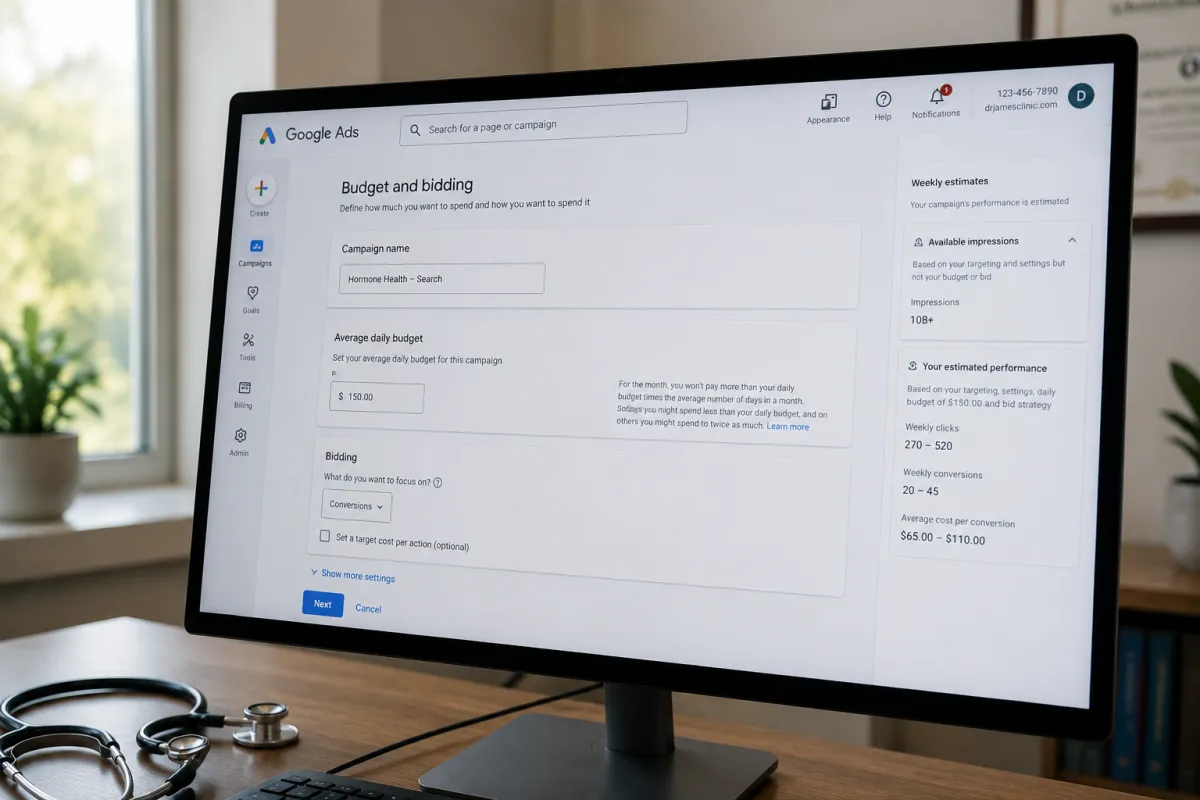
One of the most common questions functional medicine clinic owners ask isn't about SEO or Google Ads. It's much simpler: "How much should I actually spend on marketing?"
Spend too little, and growth becomes unpredictable because referrals and word of mouth can only carry a practice so far. Spend too much, and it's easy to waste money on advertising or agencies before the fundamentals of your marketing system are in place.
The answer isn't a universal percentage of revenue. Cash-pay healthcare practices operate differently from many other businesses because patients often spend days or weeks researching providers before scheduling a consultation. That means your marketing budget needs to support visibility, trust, conversion, and retention — not just traffic.
In this guide, you'll learn how to build a marketing budget based on your clinic's stage of growth, where your money should go first, and how SEO, Google Ads, Local SEO, website optimization, reviews, and email marketing work together. The goal isn't to spend more — it's to invest in the channels most likely to generate qualified consultation requests over time.
Before increasing your marketing budget: make sure your website, Google Business Profile, and conversion tracking are ready to turn visitors into consultations.
Why Marketing Is a Growth Investment, Not Just an Expense
Many functional medicine clinics think about marketing only when appointment requests slow down. That's understandable, but it creates a reactive cycle where marketing starts and stops depending on the calendar.
A healthier approach is treating marketing as part of your patient acquisition infrastructure. Your website, Google Business Profile, SEO content, reviews, and advertising all work together to create a predictable flow of new consultation opportunities.
This is especially important for cash-pay practices. Unlike insurance-based clinics, patients are making a larger financial decision before booking. They compare providers, read reviews, visit multiple websites, and often need reassurance before scheduling.
The practices that grow consistently usually aren't the ones spending the most. They're the ones investing in the right foundation before adding more marketing channels — the system we walk through in our patient acquisition playbook.
How Much Should a Functional Medicine Practice Spend on Marketing?
Short answer: a functional medicine practice should set its marketing budget based on its stage of growth, patient acquisition goals, and clinic capacity — not a fixed percentage of revenue. New clinics typically prioritize foundational assets like their website, Google Business Profile, and Local SEO, while growing clinics invest more in SEO, Google Ads, content marketing, and conversion optimization.
Instead of asking "What's the right number?" ask three questions first:
- How established is my practice?
- Do I have capacity for new patients?
- Which marketing channels are already working?
Those answers matter far more than copying another clinic's budget. The important takeaway is that your budget evolves as your practice grows — marketing should become more sophisticated, not simply more expensive.
Marketing Budget by Stage of Practice
Different practices need different priorities. Spending money too early on advanced marketing channels often produces disappointing results because the foundation isn't ready yet.
| Stage | Primary goal | Where the budget goes |
|---|---|---|
| Startup practice | Building trust and discoverability | Website, Google Business Profile, Local SEO, first reviews |
| Growing practice | Consistent consultation requests | Ongoing SEO, educational content, Google Ads, email marketing, reputation |
| Established multi-provider clinic | Efficiency across channels | Multi-location Local SEO, conversion optimization, larger content clusters, automation |
Startup functional medicine practice
A new clinic benefits most from investing in assets that continue working long after they're created. Your website should clearly explain your services and make booking simple. Your Google Business Profile should be complete, with accurate categories, photos, hours, services, and appointment links. Local SEO and reviews deserve attention before paid advertising because they improve discoverability organically. This stage is about building trust. Use our first 50 patients launch plan to turn those foundations into a phased acquisition sequence.
Growing practice
Once your clinic is consistently serving patients and has room for additional consultations, your budget can expand into channels that generate more demand: ongoing SEO, educational content, Google Ads for high-intent services, email marketing, and reputation management. The objective shifts from "getting found" to "generating consultation requests consistently."
Established multi-provider clinic
Larger clinics typically have more marketing opportunities because they offer additional services, practitioners, or locations. Budgets often expand toward Local SEO for multiple locations, website conversion optimization, larger content clusters, more sophisticated Google Ads campaigns, and marketing automation that supports patient retention. The focus becomes improving efficiency across every channel.
Where Should Your Marketing Budget Go First?

One of the easiest ways to waste money is investing in advanced marketing before your clinic has a strong digital foundation. Think of marketing priorities in layers rather than channels.
| Layer | What it includes | Why it comes first |
|---|---|---|
| 1. Foundation | Website, service pages, Google Business Profile, conversion tracking | Every other channel sends people here |
| 2. Visibility | Local SEO, reviews, educational content | Compounds over time without paying per click |
| 3. Demand | Google Ads for high-intent searches | Immediate visibility once the foundation converts |
| 4. Nurture | Email marketing, retention, referrals | Turns research-stage visitors into future patients |
This doesn't mean social media has no value. It means patients searching for care are often much closer to booking than someone casually scrolling through Instagram.
How Much Should You Spend on Google Ads?
Google Ads is one of the few marketing channels that can generate visibility immediately, but it also has the greatest potential to waste budget if campaigns aren't structured properly. The total Google Ads budget has two parts: the advertising spend itself and the work required to manage campaigns, landing pages, and conversion tracking.
For a focused breakdown of media spend, management fees, supporting costs and patient-acquisition maths, read how much Google Ads costs for a clinic. To turn those costs into a clinic-specific go or no-go threshold, use our guide to whether Google Ads is worth it for a small cash-pay practice.
Don't separate ad spend from landing pages
Many clinics budget for clicks but forget the experience after someone clicks. If an advertisement sends visitors to a homepage that doesn't match their search intent, you're paying for traffic without giving patients a clear next step. A dedicated landing page for hormone health, gut health, or thyroid consultations often provides a much better experience than a general homepage.
Budget according to demand, not competition alone
Local demand varies by service and location. Instead of targeting every possible functional medicine keyword, focus campaigns around consultations your clinic actively wants to grow. A smaller, highly targeted campaign is often easier to manage than a broad campaign covering every wellness topic — our guide to PPC advertising for wellness practices covers structure and budgets in depth.
Conversion tracking belongs in the budget
Every Google Ads campaign should track consultation requests, phone calls, booking clicks, and other meaningful actions. Without conversion tracking, you know how much you spent — but not whether marketing generated consultations.
How Much Should You Spend on SEO?
SEO is different from advertising because it's an ongoing investment rather than a one-time purchase. Your website becomes more valuable over time as it gains content, authority, internal links, reviews, and local relevance.
Local SEO comes first
Local SEO helps patients discover your clinic through Google Maps and local searches. That includes optimizing your Google Business Profile, maintaining consistent business information across directories, creating location pages, collecting reviews, and strengthening local relevance.
Technical SEO keeps your website healthy
Technical improvements help search engines crawl and understand your website: page speed, mobile usability, internal linking, structured service pages, and clear website architecture.
Content SEO compounds over time
Educational blog articles answer questions patients search before booking consultations. Instead of publishing random wellness content, build articles around services and symptoms your clinic specializes in — over time, these create topical authority that supports both search visibility and patient trust, as covered in our content marketing guide.
SEO is a monthly process
Unlike redesigning a website, SEO continues evolving. New service pages, updated articles, internal links, review management, and technical maintenance all contribute to long-term growth.
Budgeting for Website Conversion Optimization
Getting more website visitors doesn't automatically produce more patients. Conversion rate optimization focuses on helping existing visitors become consultation requests.
What deserves budget on your website?
- Clear consultation buttons and short, mobile-friendly booking forms.
- Dedicated landing pages for priority services.
- Practitioner biographies with professional photography.
- Page speed and mobile experience improvements.
Small improvements often create a better patient experience than an expensive redesign — see our landing page optimization service for what a conversion-ready page looks like.
Don't Forget Conversion Tracking
Many clinics know how many website visitors they receive but not how many consultations marketing generates. That's the difference between traffic reporting and marketing measurement.
Rather than measuring vanity metrics, track actions that represent genuine patient interest: appointment request forms, phone calls from the website, online booking clicks, Google Business Profile interactions, and Google Ads conversions.
Attribution improves future budgeting. If Local SEO generates consultation requests while another channel produces traffic without bookings, future budget decisions become much clearer. Tracking helps you invest confidently instead of increasing spend based on assumptions.
The Biggest Marketing Budget Mistakes Functional Medicine Clinics Make
Marketing budgets often fail because clinics invest in channels before building the systems that support them. The most common mistakes include:
- Spending heavily on Google Ads before optimizing the website.
- Ignoring Google Business Profile and Local SEO.
- Hiring a general marketing agency unfamiliar with cash-pay healthcare — our guide on whether to hire a marketing agency covers how to choose well.
- Publishing content without a long-term SEO strategy.
- Failing to collect Google reviews consistently.
- Running campaigns without conversion tracking.
These mistakes don't necessarily waste money immediately — they make it difficult to understand what's actually working. A smarter budget fixes the foundation first and scales successful channels afterward.
How to Measure Whether Your Marketing Budget Is Working

Marketing performance should be measured by consultation quality and patient acquisition — not just clicks or impressions.
| Metric to review monthly | What it tells you |
|---|---|
| Consultation requests by channel | Which marketing activities actually generate patients |
| Cost per consultation (paid channels) | Whether ad spend is becoming more or less efficient |
| Google Business Profile calls & direction requests | How much local discovery your profile drives |
| Organic visibility for priority services | Whether SEO investment is compounding |
| New reviews and average rating | Whether your trust signals keep growing |
Notice that none of these metrics require promising ROI percentages. They simply help answer whether marketing is generating meaningful business activity.
Sample Marketing Budget Allocation (Illustrative)
Every clinic allocates resources differently depending on goals, but this framework helps prioritize channels.
| Channel | Share of budget (illustrative) | Role |
|---|---|---|
| Local SEO & Google Business Profile | ~25% | Local discovery and trust |
| SEO content & service pages | ~25% | Compounding organic visibility |
| Google Ads (spend + management) | ~30% | Immediate high-intent demand |
| Email marketing & nurture | ~10% | Converting research-stage patients |
| Website conversion optimization | ~10% | Turning visitors into consultations |
Illustrative example — not an industry standard or recommended percentage. Rather than copying percentages, ask whether your current budget reflects your clinic's priorities. Owners of HRT, BHRT, menopause and testosterone practices can use our hormone clinic marketing cost guide for a more specific breakdown of fees, ad spend and clinic economics.
How to Increase Marketing Spend as Your Practice Grows
Increasing marketing spend should follow successful systems — not precede them. If SEO is generating consultation requests, expanding content and Local SEO makes sense. If Google Ads campaigns consistently produce qualified leads, increasing advertising budget becomes easier to justify because measurement already exists.
Growing clinics often expand marketing in stages instead of launching multiple new channels simultaneously: additional location pages, more service-specific SEO content, new Google Ads campaigns for specialty services, conversion optimization for new landing pages, and patient retention automation. Growth becomes easier when each new investment builds on an existing foundation.
Final Budget Checklist Before Spending Another Dollar
Before increasing your marketing budget, make sure these essentials are in place:
- Your Google Business Profile is fully optimized.
- Your website clearly explains services and makes booking easy.
- Service landing pages exist for priority consultations.
- Google reviews are being collected consistently.
- Conversion tracking measures calls and consultation requests.
- Your clinic has capacity for additional patients.
- Marketing goals are defined before launching campaigns.
This checklist helps prevent spending money on channels that can't perform because foundational pieces are missing.
Frequently Asked Questions
How much should a new functional medicine practice spend on marketing?
New clinics usually benefit most from investing first in foundational assets like a professional website, Google Business Profile optimization, Local SEO, reviews, and basic content before increasing advertising spend.
Should I invest in SEO or Google Ads first?
If your website and Google Business Profile are not optimized yet, SEO and Local SEO often provide a stronger foundation. Google Ads becomes more effective once landing pages and conversion tracking are ready.
How much should I budget for Local SEO?
Local SEO should be treated as an ongoing marketing investment rather than a one-time setup because profiles, reviews, content, and local optimization require consistent attention.
Is Google Ads worth it for functional medicine clinics?
Google Ads can be valuable when campaigns target high-intent local searches and measure consultation requests through proper conversion tracking.
What's included in a healthcare marketing budget?
A comprehensive budget may include website optimization, SEO, Local SEO, Google Ads, content marketing, email marketing, review management, photography, analytics, and conversion tracking.
Should cash-pay clinics spend a percentage of revenue on marketing?
A fixed percentage is less useful than budgeting according to growth stage, clinic capacity, and patient acquisition goals.
How do I know if my marketing budget is working?
Track consultation requests, phone calls, booking clicks, Google Business Profile interactions, and organic visibility instead of relying only on website traffic.
When should I increase my marketing spend?
Increase spend after foundational marketing systems are working consistently and performance can be measured accurately.
Get a Functional Medicine Marketing Budget Review
A marketing budget shouldn't answer the question, "How much can I spend?" It should answer, "Where will the next marketing dollar have the greatest impact?"
For most functional medicine practices, that starts with strengthening the channels patients already use to discover and evaluate providers: Google Maps, Local SEO, your website, reviews, and conversion tracking. Once those foundations are working together, expanding into Google Ads, educational content, and email marketing becomes a strategic decision rather than a gamble.
A budget review identifies which marketing channels deserve priority based on your clinic's stage of growth, where potential patients are dropping off before booking, and how to build a marketing investment plan designed for sustainable patient acquisition rather than short-term traffic.