

Most natural medicine practitioners didn't get into this field because they wanted to run ad campaigns.
They got into it to practice a different kind of medicine. Marketing is the thing that has to happen so that the practice survives long enough to do that.
The problem is that most of the marketing advice aimed at natural medicine clinics — naturopathic, herbal, homeopathic, integrative — is recycled from generic small-business playbooks. Post more on Instagram. Start a podcast. Run some ads. It sounds plausible, and most of it quietly wastes money.
We spend our days inside the Google Ads accounts, Search Console properties and Business Profiles of clinics like yours. The strategies below aren't theory. Several of them link to the actual account data we've published, because we think you should see the numbers behind the advice.
1Decide who you're actually for
"Natural medicine" is a philosophy, not a search term. Almost nobody types it into Google when they need help.
When we analyzed 6,000+ real search queries from one wellness clinic, patients searched for a provider ("naturopathic doctor near me"), a treatment ("hormone replacement therapy"), or a problem ("mold illness") — almost never for the clinic's own category label.
So before spending anything, get specific:
- Which conditions do you most want to treat?
- Which services actually pay the bills?
- Which city or neighborhoods do your patients come from?
- Who is your ideal patient — and who isn't?
Every strategy below works better once those answers are written down, and most of them fail without them.
2Fix your Google Business Profile before you spend a dollar
We recently audited a physician-led practice whose Business Profile looked healthy at first glance: 707 views and 290 interactions over six months.
Then we looked closer. 258 of those 290 interactions — about 89% — were direction requests, and almost all the visible searches were people who already knew the practice's name. Only 29 people clicked through to the website. The profile was helping existing patients find the parking lot, and doing almost nothing to introduce the practice to new ones. The full audit is in our 90-day Google Business Profile experiment.
The fixes were not exotic:
- A primary category more specific than "Doctor."
- A Services section that actually lists the services.
- Service areas tightened to the real local market.
- Recent photos of the real clinic, not stock imagery.
- A description that matches the website's positioning.
Most natural medicine practices we look at have at least three of these problems. All of them are free to fix.
3Build service pages around the words patients actually use
Your website menu probably says things like "Herbal Medicine" or "Whole-Person Care." Your future patients are searching "why am I so tired all the time" and "naturopath for hormones."
That gap costs real money. In one account we manage, patients searching around a service the clinic called "preventive and metabolic health" were actually typing "how to get rid of pre diabetes fast" and "diabetic specialist doctor near me" — we wrote up that language gap here.
The practical version: one strong page per meaningful service, written around the problem it solves, in the patient's vocabulary. A clinic doesn't need 6,000 pages to show up for 6,000 searches — it needs one good page per intent. Condition pages (gut health, hormone balance, chronic fatigue) often out-earn service pages, because problems are what people search first.
4Get serious about reviews — as a system, not a favor
Patients researching natural medicine are often skeptical by default. They've usually tried conventional routes first, they're paying out of pocket, and they want evidence that other people like them had a good experience.
Reviews are that evidence, and they don't accumulate on their own. Satisfied patients forget. The clinics that build review momentum treat it as a workflow:
- A direct review link sent by email or SMS after positive visits — every time.
- Requests timed to good moments: after a first consultation, or a follow-up where the patient expressed appreciation.
- A short professional reply to every review, positive or negative.
- No incentives, no cherry-picking, no discussing anyone's health publicly.
We've covered the mechanics in our guides to getting more Google reviews and reputation management. The short version: ask at the right moment, make it one tap, respond to everything, and never discuss anyone's health in a public reply.
5Publish answers, not announcements
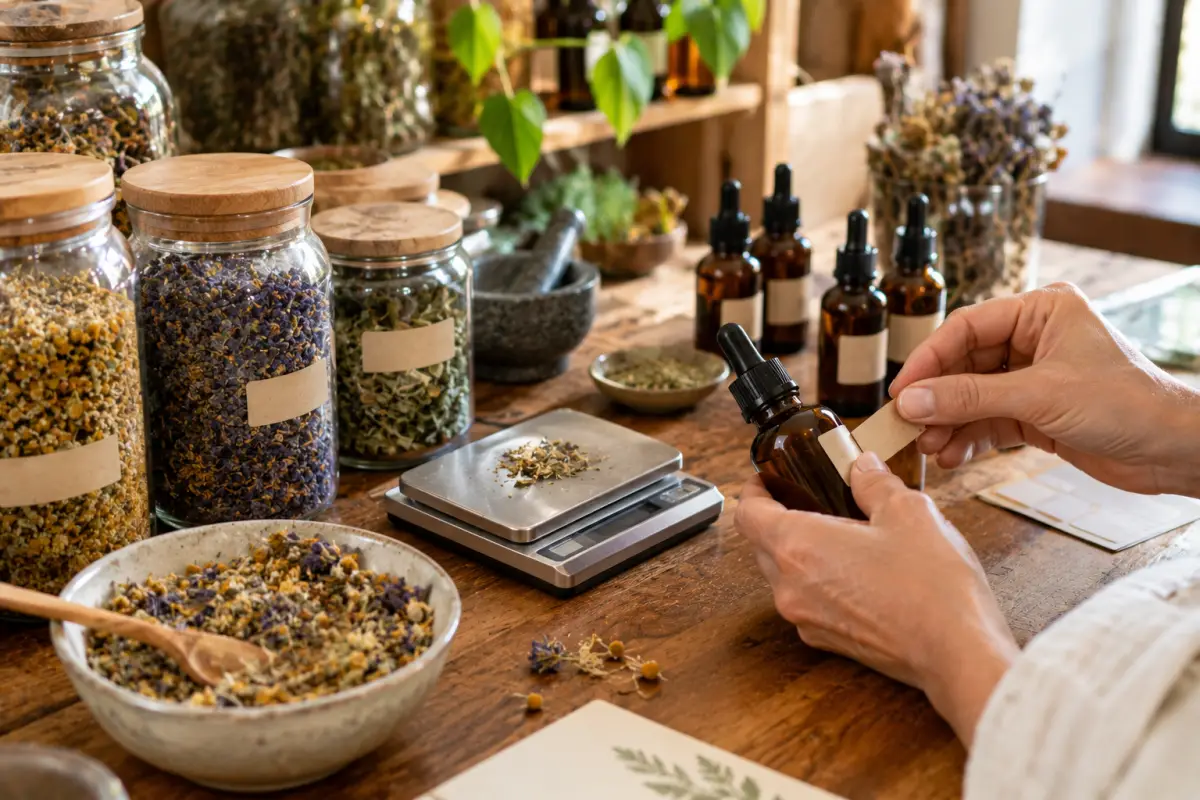
Most clinic blogs are announcement boards — new hours, a supplement sale, a holiday greeting. Nobody searches for those.
What people do search for are the questions you answer in the consultation room every day. What does an initial naturopathic visit involve? Is there a natural approach to perimenopause symptoms? What labs actually matter for fatigue?
One condition page in an account we analyzed — a mold illness page — pulled 8,924 impressions and 123 clicks in six months, more organic traffic than most clinics' entire blogs. Not because it was clever. Because it answered a question a scared person was typing at midnight. Our guide to content marketing for naturopathic clinics walks through building this properly.
6If you run Google Ads, measure each service separately
Google Ads can work very well for natural medicine — and it can also quietly burn thousands. The difference is usually measurement, not budget.
Here's the clearest example we've published. One multi-service clinic split its budget almost exactly three ways across naturopathic medicine, medical weight loss and hormone replacement. Same account, same city, same six months. Naturopathic medicine generated tracked conversions at $24.33 each. Hormone replacement: $110.61. One service produced 66% of all conversions from a third of the spend — the full breakdown is here.
If those campaigns hadn't been separated, the account average would have looked mediocre and nobody would have known why. The rules that make this measurable:
- One campaign per service — never everything in one bucket.
- A dedicated landing page per campaign, not the homepage.
- Conversion tracking installed before you scale spend, not after.
- A monthly look at cost per conversion for each service separately.
7Treat your mobile site as the real site
In that same clinic's account, 188 of 226 tracked conversions — 83% — came from phones. Mobile visitors also converted at a higher rate than desktop visitors and cost 27% less per conversion. We published the device data here.
Yet most clinic websites are still designed on a desktop monitor and merely "checked" on mobile. Open your own site on your phone right now and ask:
- Can someone tap to call in one touch?
- Is the booking button visible without scrolling?
- Does the form have four fields — or fourteen?
- Does the page load before they lose patience?
Every point of friction on that small screen is filtering out the majority of your potential patients.
8Follow up — most patients aren't ready today
Choosing a natural medicine provider is rarely an impulse decision. People research for days or weeks, especially when they're paying cash.
Email is how you stay present during that window without being pushy. A simple welcome sequence outperforms a monthly newsletter that nobody opens:
- A genuinely useful resource the moment someone signs up.
- One educational email answering a common question.
- A short practitioner introduction — who you are, how you work.
- An invitation to book, only after the first three.
After someone becomes a patient, the same channel handles reminders, seasonal guidance and the follow-through that quietly drives rebookings and referrals.
You don't need sophisticated software for this. You need four or five well-written emails and the discipline to keep them running.
9Stop treating referrals as luck
Referrals are probably already your best channel. The mistake is leaving them entirely to chance.
A referral system for a natural medicine practice doesn't mean incentives or awkward asks. It means the experience is easy to recommend:
- Patients can describe what you do in one sentence.
- Your booking link is easy to forward.
- Nearby practitioners — massage therapists, doulas, trainers, even conventional GPs open to it — know exactly which cases you're the right fit for.
One coffee with a complementary practitioner every month compounds. So does simply telling happy patients, at the natural moment, that you're accepting new patients like them.
10Look at the numbers once a month — the right numbers

Rankings feel like the score, but they aren't. We watched a clinic rank at position 2.94 — effectively top three — for "hormone replacement therapy" and earn 3 clicks from 555 impressions, a 0.54% click-through rate. Page one, almost no traffic. That case study is here.
So measure things that connect to patients, not vanity:
| Check monthly | Why it matters |
|---|---|
| Consultation requests, calls and bookings | The only numbers that pay rent. |
| Where each new patient came from | Tells you which channel deserves next month's effort. |
| Search Console queries and CTR | Shows where you're visible but not being chosen. |
| Business Profile interactions | Direction requests vs. discovery — navigation isn't growth. |
| Cost per conversion, per service | Averages hide your best and worst services. |
Thirty minutes a month is enough. The point isn't reporting — it's noticing which of the nine strategies above is actually moving, and doing more of that one.
Where to start
Not with all ten. That's how nothing gets done.
If your Google Business Profile is thin, start there — it's free and it compounds. If your profile is solid but your site reads like a brochure, rewrite one service page around real patient language. If traffic exists but bookings don't, spend a week on the mobile experience before spending anything on ads.
Natural medicine grows on trust, and trust is built in small, consistent, verifiable steps. The same is true of the marketing. Our practice growth playbook covers the full system if you want the longer version.