

Before a patient books with a naturopathic doctor, they usually do one thing first: research the clinic online.
They search Google, read reviews, compare practitioners, browse the website, and often look at Google Maps before ever clicking "Book a Consultation." For cash-pay practices, that research matters even more: patients are making an out-of-pocket investment and want reassurance they're choosing someone trustworthy.
That's why reputation management for naturopathic practices is much more than collecting five-star reviews. Your online reputation influences whether your clinic appears credible in Google Search, how often people click your listing in Google Maps, and whether website visitors become consultation requests.
A strong reputation is built through consistent patient experiences, ethical review generation, thoughtful responses, and ongoing monitoring — not by chasing perfect ratings or hiding criticism. This guide shows you how to build that system.
Why Reputation Matters More for Naturopathic Practices
Most naturopathic clinics rely heavily on trust before someone becomes a patient, and healthcare decisions often involve days or weeks of research.
Someone searching for help with hormone balance, digestive issues, or chronic fatigue may compare multiple providers before booking — and during that process, reviews become one of the strongest trust signals available. A clinic with a complete profile, recent reviews, and professional responses feels more credible than one with little online activity, even if both provide excellent care.
Reputation influences every stage of the patient journey
| Stage | How reputation shapes the decision |
|---|---|
| Discovery | Ratings and review counts influence which listings patients click in Google Maps. |
| Comparison | Recent reviews and professional responses help your clinic stand out against other providers. |
| Decision | Website testimonials and trust signals reduce hesitation before booking. |
| After the visit | Positive experiences become new reviews, referrals and repeat consultations. |
A reputation strategy helps people discover your clinic and gives them confidence to take the next step — which is why it sits at the heart of our practice growth playbook.
How Online Reputation Affects Local SEO and Google Maps
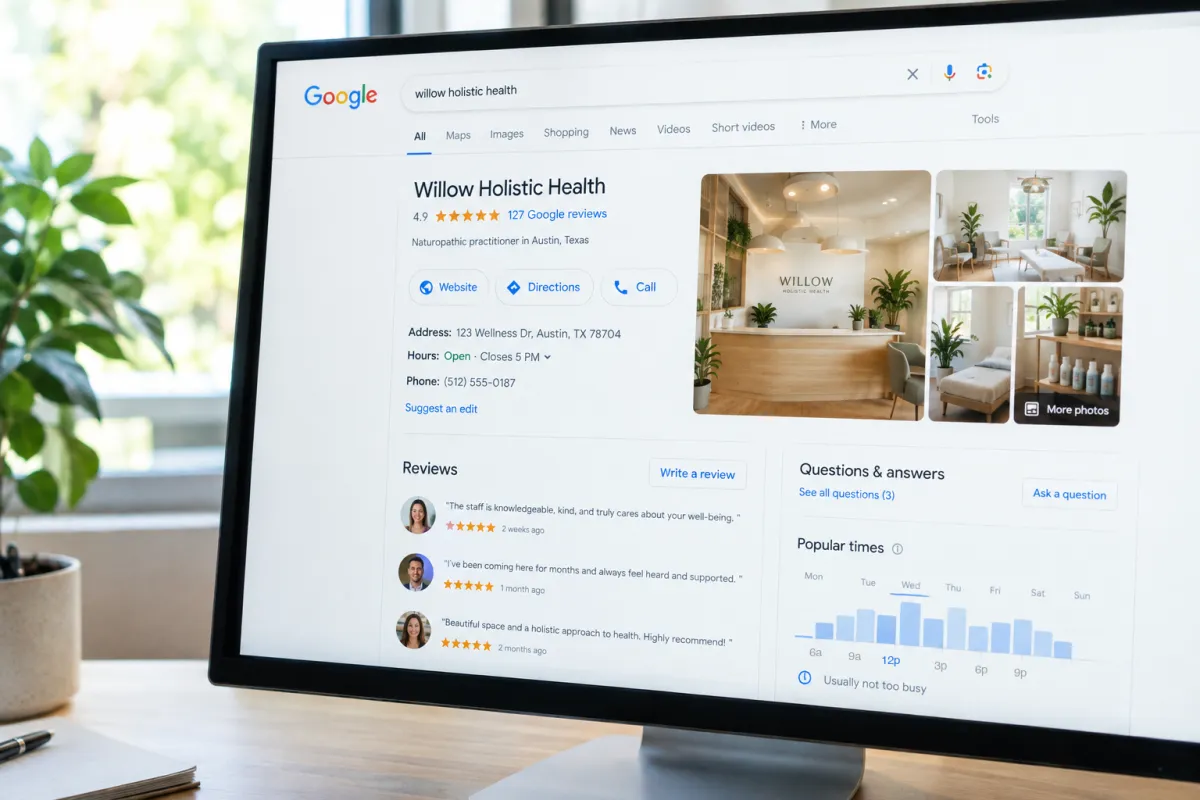
When patients search phrases like "naturopath near me," Google often displays a local map before traditional results. Your Google Business Profile is one of the most important assets in local healthcare marketing, and reviews contribute to it in several ways.
Reviews support local visibility
Google has explained that prominence is one factor used in local search results. Reviews alone don't guarantee rankings, but they contribute useful signals: a steady flow of recent reviews, authentic feedback from real patients, responses that demonstrate engagement, and reviews that mention services naturally.
Why recent reviews matter
Patients notice review dates before they read review content. If your newest review is two years old, visitors may wonder whether the clinic is still active. Consistent reviews throughout the year send a stronger signal than dozens in one month and none afterward.
Reputation also improves click-through rates
Two clinics might sit next to each other in Google Maps: one with dozens of recent reviews, updated photos and thoughtful responses, the other with limited activity. Even at similar rankings, the first listing wins the click. If your profile isn't appearing at all, start with our guide on why your clinic isn't showing up on Google Maps.
1The Foundations of Reputation Management
A complete reputation strategy is a system built across several channels, not just Google reviews.
Google Business Profile is your public reputation hub
Your profile should include accurate clinic information, a booking link, services, hours, and clinic and practitioner photos. Patients often interact with this listing before your website.
Website testimonials reinforce trust
Reviews belong on Google, but testimonials belong on your website — placed naturally on your homepage, service pages and booking page, and featured with patient permission rather than copied wholesale from Google.
Third-party review platforms still matter
Depending on your region, patients may also find reviews on Healthgrades, Yelp, Facebook and Apple Maps. Consistency across listings helps patients verify your clinic information and reduces confusion.
Reputation includes visual trust signals
Patients don't only read reviews — they look at your clinic. Photos of the reception area, consultation rooms, practitioner headshots and signage help, and authentic clinic photography usually outperforms generic stock imagery because it reflects the real patient experience.
2How to Get More Google Reviews Without Being Pushy
Many clinics wait for reviews to happen voluntarily — but satisfied patients are busy and simply forget. An ethical review strategy creates consistent opportunities without pressuring anyone.
Ask at the right moment
The best requests happen shortly after a positive interaction — an initial consultation, an appreciative follow-up visit, or the end of a wellness program. Timing matters more than volume.
Make leaving a review effortless
Instead of telling patients to "find us on Google," send a direct review link through email or SMS after the appointment. The fewer steps required, the more reviews get completed.
Use email follow-ups naturally
A follow-up email often feels more personal than a request at checkout.
Example review request email:
Hi [First Name], thank you for visiting our clinic today. We hope you found your consultation helpful. If you'd like to support our practice, we'd be grateful if you shared your experience with a Google review — your feedback helps others looking for naturopathic care make informed decisions. [Google Review Link]
Notice the email asks for feedback — not a five-star review.
SMS requests work well when used thoughtfully
Patients read text messages quickly, so keep them brief and avoid repeated reminders.
Example SMS: Hi Sarah! Thank you for visiting our clinic today. If you'd like to share your experience, we'd really appreciate your feedback here: [Review Link]. Thanks for supporting our practice!
Train your front desk team
Your reception team knows when patients leave happy. A simple "You'll receive a follow-up email with a feedback link if you'd like to share your experience" feels conversational instead of promotional. For the complete workflow, see our guide on getting more Google reviews.
3How to Respond to Positive Reviews Professionally
Receiving reviews is only half the strategy — responding shows your clinic is active and engaged.
Thank reviewers without revealing health information
Avoid confirming someone is a patient or discussing medical details publicly. Instead of "We're glad your thyroid treatment helped," choose language focused on appreciation.
Example professional response: Thank you for taking the time to leave such thoughtful feedback. We appreciate your support and are glad you had a positive experience with our team. We look forward to welcoming you again in the future.
Short responses often feel more authentic than lengthy replies.
Respond consistently
Aim to respond within a reasonable timeframe — it shows prospective patients your clinic is engaged and keeps your profile active. A simple response beats no response at all.
4How to Handle Negative Reviews Without Damaging Trust
Every practice eventually receives a negative review — no clinic can prevent every misunderstanding or scheduling frustration. The goal is not a perfect rating; it is responding in a way that demonstrates professionalism to the future patients reading your reviews, not just the reviewer.
Stay calm and protect patient privacy
It is tempting to defend your clinic immediately — but emotional responses create a worse impression than the review itself. Even if someone describes their own treatment in detail, your public response should never verify appointments, diagnoses, or services provided. Keep replies general and invite discussion privately.
Example response template: Thank you for sharing your feedback. We're sorry to hear that your experience did not meet your expectations. We take all feedback seriously and would appreciate the opportunity to learn more. Please contact our clinic directly so we can discuss your concerns privately.
This acknowledges the concern without admitting fault, revealing information, or escalating the situation.
Learn from legitimate feedback
Not every negative review is unfair. Reviews often surface recurring issues patients hesitate to mention in person — scheduling, wait times, parking, or billing. Treat them as patient experience feedback, not just marketing content.
Positive vs. negative responses at a glance
| Positive review | Negative review | |
|---|---|---|
| Tone | Warm and appreciative. | Calm, respectful, non-defensive. |
| Content | Thank them; welcome them back. | Acknowledge; invite a private conversation. |
| Never include | Health details or confirmation of care. | Health details, blame, or arguments. |
| Length | Two to three sentences. | Three to four sentences. |
This consistency helps future patients see your clinic as approachable and trustworthy, regardless of the review.
5Common Reputation Mistakes Naturopathic Practices Make
Most reputation problems come from inconsistency rather than bad patient care.
Waiting until there's a problem
Some clinics ignore reviews for months, then suddenly respond to everything after one negative review arrives. Reputation management should be part of monthly marketing maintenance instead.
Responding emotionally
A defensive response discourages prospective patients. Even when a review feels unfair, professionalism builds more trust than winning an argument online.
Asking only certain patients for reviews
Ethical review generation means inviting feedback broadly — not filtering requests based on whether you expect five stars. A consistent process beats selective asking.
Buying or incentivizing reviews
Avoid purchasing reviews or offering gifts in exchange for them. Authentic feedback is more trustworthy and aligned with platform guidelines.
Forgetting about your Google Business Profile
An incomplete profile — outdated hours, missing services, no photos — can reduce trust before patients even reach your website.
6How Reviews Improve Website Conversion Rates
Reviews also influence what visitors do on your website. Someone researching a clinic is asking: Can I trust this practitioner? Do other patients recommend them? Well-placed testimonials answer those questions naturally.
Where testimonials belong
| Page | What to feature |
|---|---|
| Homepage | Two or three short quotes that capture the overall patient experience. |
| Service pages | A testimonial relevant to that consultation or health focus. |
| About page | Feedback about the practitioner's communication and care. |
| Booking page | One reassuring quote near the consultation form to reduce hesitation. |
Focus on patient experience, not outcomes
Testimonials should emphasize communication, professionalism, compassion and overall experience — never medical claims or guaranteed results. Good examples mention feeling heard, having a clear plan, or appreciating the clinic environment.
Mix reviews with other trust signals
Reviews work hardest alongside practitioner credentials, clinic photography, FAQs and educational content — the same principles behind our landing page optimization service.
7Build a Reputation Monitoring System for Your Clinic
Reputation management is ongoing — build a simple routine instead of checking occasionally.
Monitor Google Business Profile regularly
Enable notifications for new reviews, customer questions, suggested profile edits and messages, and respond promptly so questions don't sit unanswered.
Watch other platforms and brand mentions
Patients may leave reviews on other websites without notifying you, so check those platforms monthly and occasionally search your clinic name in Google to spot outdated information or duplicate listings.
Create a monthly reputation review
A short recurring meeting covering new reviews, response rate, rating trends and listing accuracy takes less than thirty minutes but keeps reputation management proactive instead of reactive.
A Monthly Reputation Management Checklist
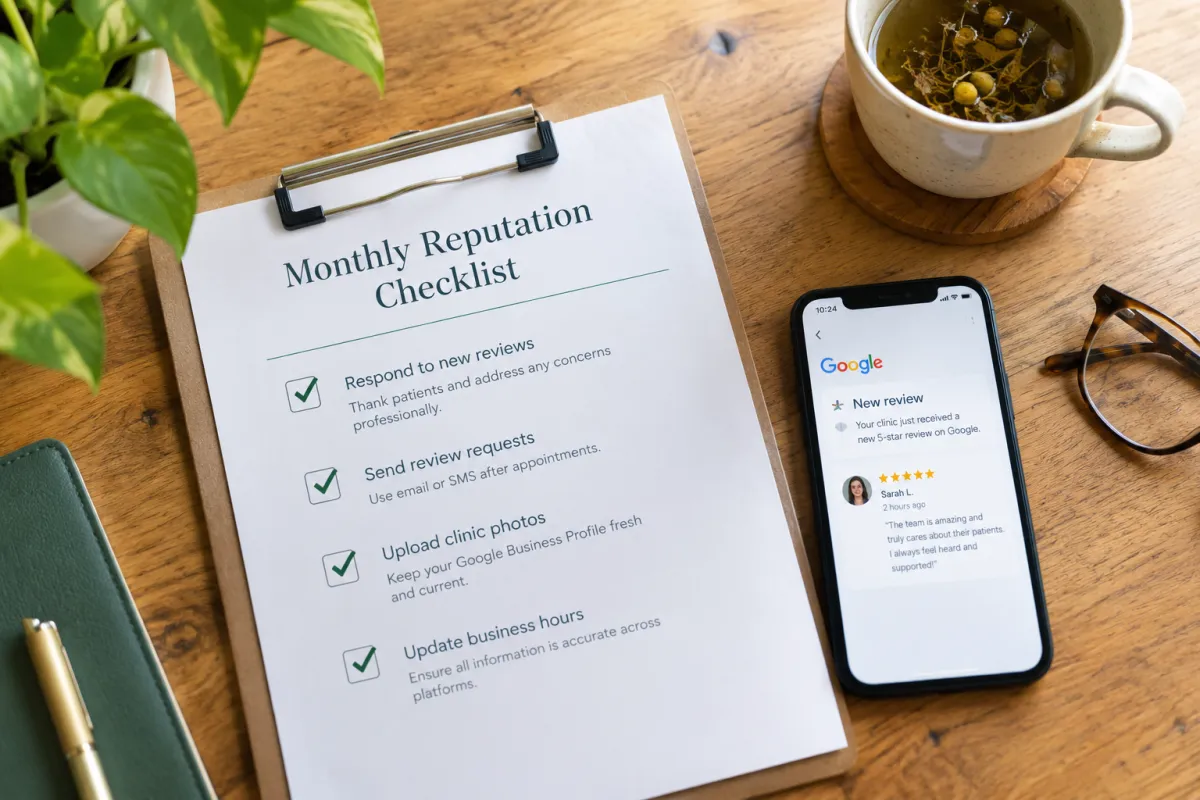
Consistency matters more than intensity. Rather than spending hours every few months, complete a small set of tasks each month:
- Respond to every new Google review — short, appreciative, privacy-conscious.
- Request reviews from recent patients via email or SMS as part of your follow-up workflow.
- Upload one or two new clinic photos to keep your profile current.
- Answer questions posted on your profile — future patients read them.
- Update website testimonials with recent patient experiences.
- Check hours, services and contact information across listings — consistency supports Local SEO.
A Reputation Workflow That Feeds Patient Acquisition
A simple workflow connects patient experience with Local SEO and practice growth:
- Patient completes a consultation — deliver a positive experience first.
- Send a follow-up email or SMS with a review link — easy, pressure-free.
- Respond to reviews professionally — thank reviewers while protecting privacy.
- Showcase testimonials on your website — reinforce trust on service and booking pages.
- Strengthen Local SEO and Google Maps visibility — reviews feed the broader acquisition system.
Reputation is one piece of a larger marketing system, not an isolated tactic. Integrate reviews into your acquisition funnel alongside the strategies in our lead generation guide and patient acquisition guide.
Frequently Asked Questions
Why is reputation management important for naturopathic practices?
Reputation management helps patients trust your clinic before booking a consultation. It also supports Local SEO by keeping your Google Business Profile active and encouraging authentic patient reviews.
How do I get more Google reviews for my naturopathic clinic?
Create a consistent review request process using post-appointment email or SMS follow-ups. Ask patients for honest feedback at appropriate moments and make the review link easy to access.
Can Google reviews improve Local SEO?
Reviews can support Local SEO by strengthening your Google Business Profile through fresh, authentic patient feedback and ongoing engagement. Reviews are one of several factors influencing local visibility.
Should naturopathic doctors respond to every Google review?
Responding to every review is generally a good practice. Thank positive reviewers briefly, and respond to negative reviews professionally without discussing private health information.
What should I do if I receive a false or inappropriate review?
Respond calmly with a general message, avoid confirming patient relationships, and use Google's reporting process if the review violates platform policies.
What's the best way to ask patients for reviews?
Use a simple follow-up email or SMS within a few days of a positive appointment experience. Avoid incentives or language requesting only positive reviews.
Can reviews increase consultation bookings?
Reviews help reduce uncertainty for prospective patients. Seeing recent, thoughtful feedback often increases confidence in contacting a clinic for an initial consultation.
What tools help monitor a clinic's online reputation?
Google Business Profile notifications, review management software, CRM integrations, and regular manual searches for your clinic's name can all help monitor your online reputation.
Build a Reputation That Patients Trust Before They Book
Reputation management is both a patient experience strategy and a marketing strategy. Patients discover your clinic through Google, read reviews before visiting your website, and look for consistent signals that your practice is professional and responsive.
The strongest reputation doesn't come from chasing five-star ratings. It comes from a consistently positive experience, honest feedback requests, professional responses, protected privacy, and monthly monitoring. Combined with Local SEO and educational content, it becomes a patient acquisition system that earns trust before the first consultation is ever booked.