
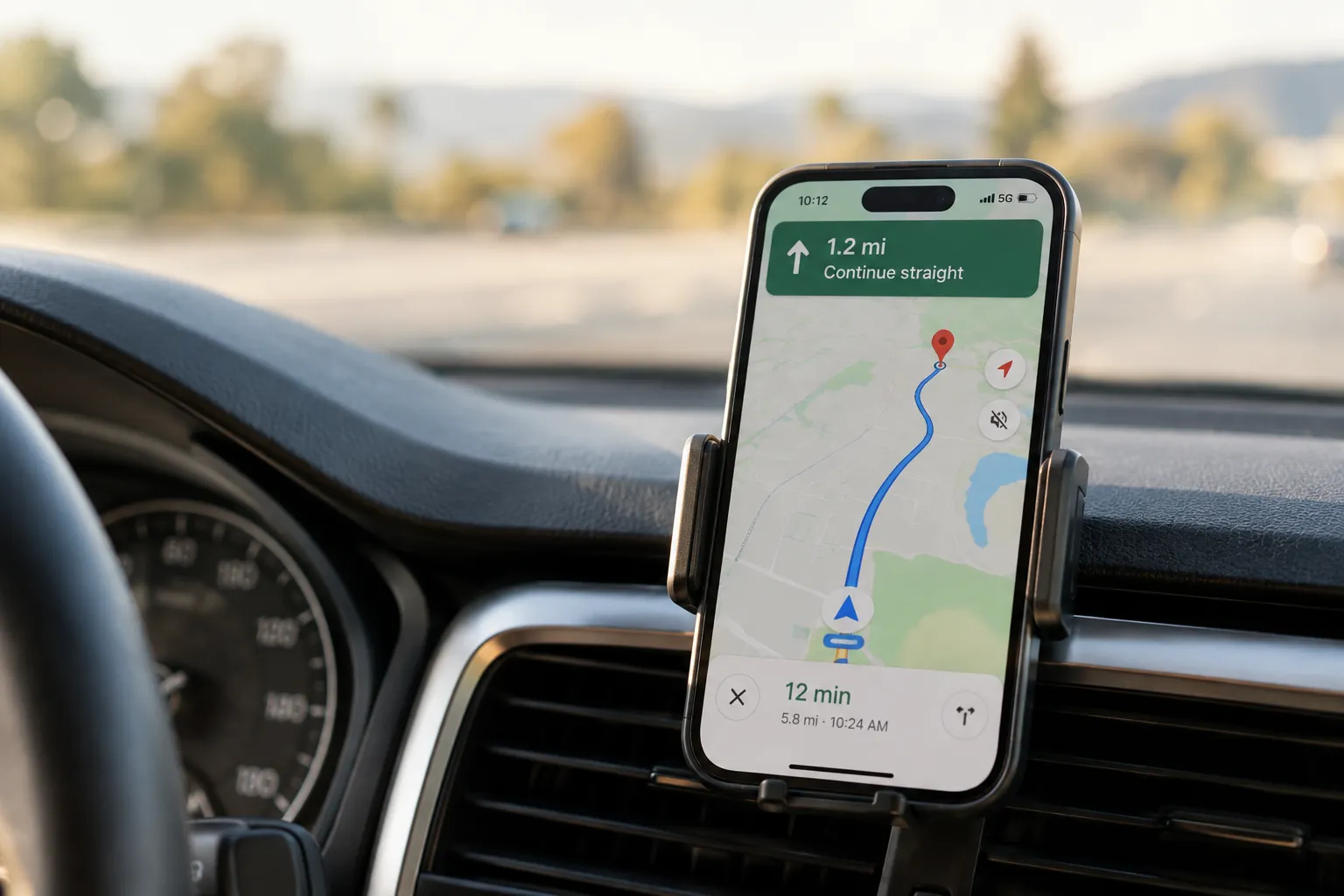
A medical practice can generate hundreds of interactions from its Google Business Profile and still have a local SEO problem.
We recently audited the Google Business Profile of a physician-led integrative medicine practice in California. At first glance, the account looked reasonably active. Over the six-month period from April through September 2026, Google reported 707 profile views, 290 interactions, 258 direction requests, 29 website clicks, 3 calls, and fewer than 50 searches showing the profile.
The headline number was 290 interactions. The interesting number was 258 direction requests — approximately 89% of all recorded interactions were people asking Google for directions.
When we looked at the searches generating visibility, the situation became even clearer. The profile appeared to be functioning well for people who already knew the practice existed. It wasn't doing nearly as much to help new patients discover it. So we're turning this into a 90-day local SEO experiment.
The Starting Point: 707 Profile Views
Google reported 707 people viewing the Business Profile during the six-month period. Those views came from both Search and Maps:
- 316 views, 45%: Google Search on mobile
- 176 views, 25%: Google Search on desktop
- 117 views, 17%: Google Maps on mobile
- 98 views, 14%: Google Maps on desktop
That's legitimate visibility. But profile views alone don't tell us whether a medical practice is attracting prospective patients through local search. We needed to look at what happened next.
258 of 290 Interactions Were Direction Requests
This was the metric that changed our interpretation of the account. The profile generated 290 total interactions. Of those, 258 were direction requests — approximately 89%.
Meanwhile, Google recorded only 29 website clicks and 3 phone calls. Direction requests aren't a bad thing. For a physical medical practice, they're valuable. The problem was what they appeared to represent when combined with the search-query data.
The Searches Were Predominantly Branded and Navigational
Google reported fewer than 50 searches showing the Business Profile in its search results during the period. More importantly, the visible search queries were predominantly searches for the practice's street address, the physician's name, the practice's name, or another branded variation.
We're intentionally leaving the practice and physician anonymous in this case study, but the pattern matters. These weren't predominantly searches like "integrative medicine doctor near me," or service-specific searches from prospective patients who had never heard of the practice. Instead, people appeared to already know who or what they were looking for. That explains why directions represented such a large percentage of interactions. The Google Business Profile was acting primarily as a navigational asset. Our goal is to see whether we can turn it into a stronger patient discovery asset.
Why We're Not Calling This a Failed Google Business Profile
This distinction is important. The profile isn't necessarily performing poorly. If an existing patient searches for the practice, finds the correct location and requests directions, Google Business Profile has done something useful. Likewise, branded visibility matters.
But there are two fundamentally different local search scenarios:
Scenario A: Patient already knows the physician → searches physician/practice name → opens profile → requests directions.
Scenario B: Patient has never heard of the practice → searches for a relevant medical service → discovers practice → evaluates physician → visits website → potentially books.
The existing data suggests the profile was much stronger at Scenario A. We're going to spend the next 90 days working on Scenario B.
The goal isn't just directions for people who already know you — it's discovery for people who don't.
What We Found During the GBP Audit
The performance data made more sense once we audited the actual configuration of the profile. Several major optimization opportunities were sitting in plain sight.
1. The Primary Category Was Extremely Broad
The profile's primary Google Business Profile category was simply "Doctor." That's technically relevant, but it provides very little specificity about what makes this particular practice different. The practice specializes in physician-led integrative medicine, with areas of care including women's health, metabolic health, preventive medicine and integrative cancer care. We're reviewing the available GBP categories and relevant local competitors before deciding whether the primary category should change or whether more specific secondary categories should be introduced. We won't choose categories simply because they contain attractive keywords — they need to accurately describe the real business.
2. The Services Section Was Almost Empty
This was one of the clearest opportunities in the entire audit. The practice had developed dedicated services and corresponding website pages, but that information wasn't properly reflected in Google Business Profile. Google effectively knew "this is a doctor," but the profile was providing much less structured information about what that doctor actually offers. We're building out the Services section around genuine areas of care such as Integrative Medicine, Perimenopause & Hormone Health, Preventive & Metabolic Health, Integrative Cancer Care, Functional Medicine, Preventive Health, Healthy Aging, and Nutrition and Lifestyle Medicine. This also creates much better alignment between the website and the Business Profile.
3. The Geographic Targeting Was Messy
The profile's service areas were surprisingly broad — the entire United States and California, alongside a long list of individual California cities. We also found an obviously incorrect geographic entry pointing to a place called California in Maryland. For a physical medical practice trying to build authority around a specific California market, this wasn't a particularly coherent local footprint. We're tightening the service areas around the communities the practice genuinely serves. The objective isn't to tell Google "we serve everyone everywhere" — it's to make the practice's actual geographic relevance clearer.
4. The Business Description Didn't Match the Current Positioning
The profile description was built around older wellness-oriented messaging. Meanwhile, the practice's website and broader marketing had evolved toward a much clearer position: physician-led integrative medicine combining conventional medical expertise with evidence-informed whole-person care. That's a significant difference. We're rewriting the profile so that the same entity is being communicated consistently across website, Google Business Profile, directories, physician profiles, and other third-party sources.
5. Website Traffic Wasn't Properly Segmented
The GBP website link simply pointed to the homepage. That works for users, but it isn't ideal for measurement. We're adding dedicated UTM parameters so sessions originating from Google Business Profile can be separated from other organic traffic. This means our 90-day experiment won't be limited to asking "did website clicks increase?" — we'll also be able to examine what those visitors did after reaching the website.
6. The Booking Journey Can Be Measured Better
The profile also contains an online booking link. We're improving the relationship between the practice website and its external booking system so that we can better understand the complete path: Google → Business Profile → website → booking → confirmed appointment. A website click isn't a patient. A call isn't automatically a patient either. Ultimately, we're interested in whether local visibility produces qualified inquiries and appointments.
7. The Photo Library Needed More Real-World Signals
The profile wasn't empty — it contained physician portraits, logos and professional photographs. But there was an opportunity to add much more authentic information about the physical practice. We're expanding this with photographs of the practice exterior, entrance, office environment, consultation space, physician at the practice, parking/access, and other relevant real-world elements. These aren't stock images — they're evidence of an actual medical practice operating at an actual location.
8. Profile Posts Hadn't Been Updated in Around Two Years
The existing Google posts covered topics including gut health, hypertension and alternative medicine. But the visible posts were approximately two years old. We're restarting profile activity, but this won't become the center of the strategy. New posts will primarily reinforce the services and physician-written content that already exist on the website, particularly perimenopause and hormone health, preventive and metabolic health, integrative medicine, and integrative cancer care.
The 90-Day Experiment
This gives us a clean experiment. We're not starting from zero — we have a documented baseline from before the optimization work.
| Metric | Baseline |
|---|---|
| Business Profile views | 707 |
| Business Profile interactions | 290 |
| Direction requests | 258 |
| Website clicks | 29 |
| Calls | 3 |
| Searches showing the profile | <50 |
| Non-branded discovery | Limited |
Now we're implementing the changes. Then we'll measure the profile again.

A documented baseline is what turns "we optimized it" into something we can actually measure.
What We'll Measure at 30 Days
The first checkpoint isn't about declaring victory — local SEO changes need time. We'll primarily check whether Google is beginning to associate the profile with a broader set of relevant searches. We'll monitor search queries, profile views, website clicks, calls, and direction requests, and watch whether new non-branded queries begin appearing.
What We'll Measure at 60 Days
By the second checkpoint, we'll have more meaningful post-change data. We're particularly interested in the ratio between branded and non-branded discovery. For example, an increase from 707 to 900 profile views would be interesting — but it would be considerably more interesting if those additional views came from searches related to services the practice actually wants to grow. Traffic quality matters more than the headline number.
What We'll Measure at 90 Days
The final comparison will examine the complete before-and-after picture, comparing profile views, interactions, direction requests, website clicks, calls, searches, and non-branded discovery against the baseline above. We'll also look beyond GBP itself — if tracking allows it, we'll examine whether Business Profile visitors subsequently became leads or booked appointments.
What Would Actually Count as Success?
It isn't fewer direction requests — we don't want those to decline. It also isn't simply increasing profile views.
The outcome we're looking for is: maintain branded visibility, maintain useful navigational interactions, increase relevant non-branded discovery, and generate more qualified website visits and patient inquiries.
For this practice, that means Google gradually understanding not only the business name and address, but also what type of medical practice it is, what services it provides, and where those services are relevant.
The Bigger Lesson From This Audit
The most useful finding wasn't that this profile had 707 profile views. It was understanding what those 707 views represented.
A Google Business Profile can receive hundreds of views and interactions while still doing relatively little to introduce the practice to people who don't already know it exists. For this practice, the data suggested the profile was already useful as a navigational asset. The next stage is turning it into a stronger patient discovery asset.
We have the baseline. We're making the changes now. And in 90 days, instead of saying the Google Business Profile is "better optimized," we'll have the data to see whether the optimization actually changed how patients discover the practice.
Wellness Practice Marketing specializes in Google Ads, SEO, Local SEO, and conversion-focused websites for functional and integrative medicine practices. If you want us to audit your practice's Google Business Profile, learn more about our local SEO and marketing services for functional and integrative medicine practices.